


Executive Brief
Understanding the True Costs and Impacts of Automating Reporting and Dashboards
As of 2023, businesses face an average of $100,000 in setup costs when automating reporting and dashboards, which commonly includes software licensing, customization, and initial integration efforts. But the real challenge isn’t in the setup—it’s in maintaining relevance and ensuring the flow of actionable insights.
The Real Tension: Efficiency vs. Insight
Automation promises efficiency—there’s no denying that—but does it promise insight? Many systems churn out reports on autopilot, only to have them go unread. The tension lies in balancing streamlined operations with meaningful data interpretation. Can your team understand and act on what’s automated?
What Automation is Not
Automating reporting doesn’t mean merely translating existing processes into new software. It’s a transformation requiring an honest evaluation of current workflows, technological infrastructure, and data literacy.
The Specifics: Costs and Breaks
A recent study revealed that 30% of automated BI tools go unused thirteen months after purchase. The primary reasons? Misalignment with strategic goals and poor user adoption. Let’s look at the core areas impacted:
-
Initial Costs: Ranging from software licensing to personnel training. [Check our full service offering for detailed insights.]
-
Integration Pitfalls: Systems must interconnect without disrupting existing workflows.
-
Ongoing Maintenance: Continuous adjustments are needed as business objectives evolve.
Case Example: A Retail Firm
Consider a retail firm transitioning to automated KPI reporting. Their goal: align customer data with inventory management. Post-implementation, they found discrepancies between systems due to poorly synchronized data feeds. Resolution required revisiting initial assumptions and additional tailoring of the software—a clear indication that auditing readiness is crucial.
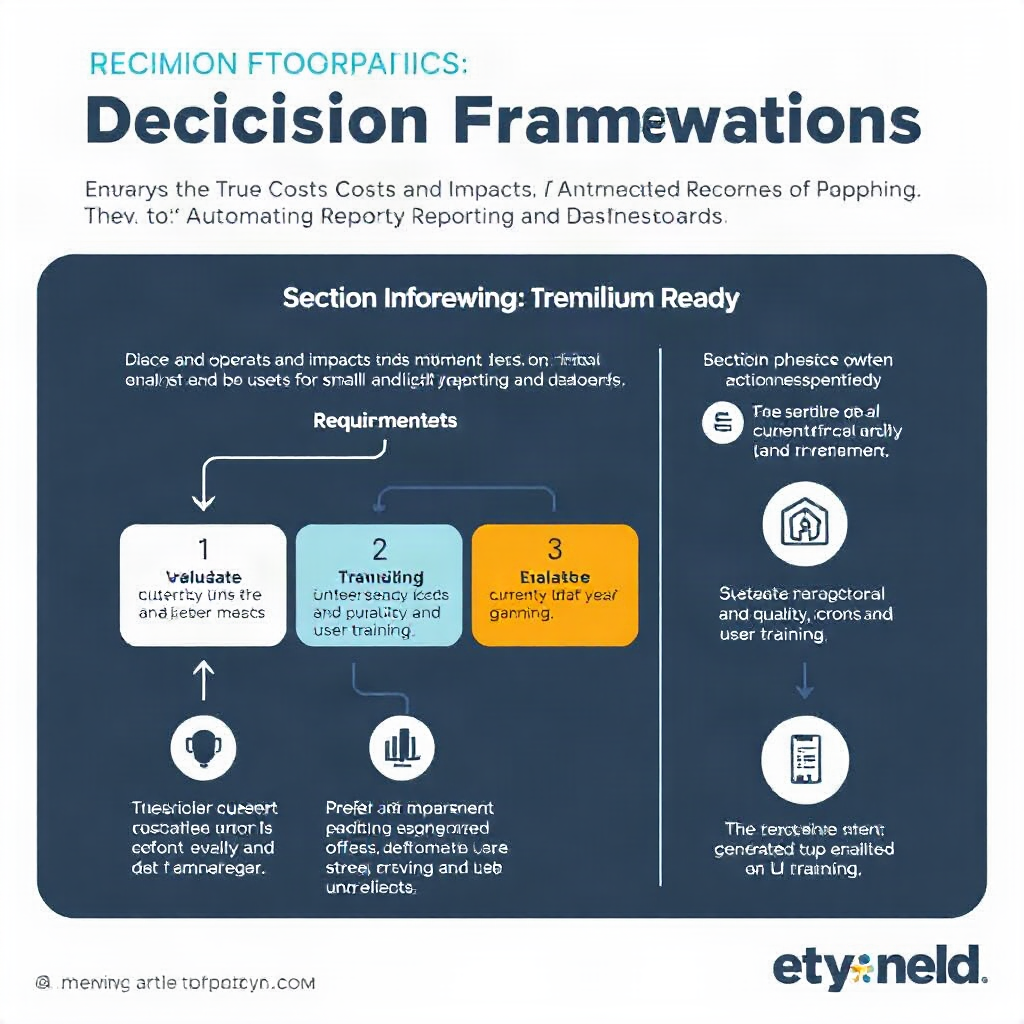
Decision Framework: Is Your Business Ready?
Before committing, evaluate:
- Current Reporting Infrastructure: Can it integrate smoothly with automation tools?
- Data Quality: Are there gaps needing cleaning and consistent input frameworks?
- User Capability: Is your team trained to interpret and act on automated insights?
Clear criteria make this decision process actionable. Assess whether a digital transformation readiness audit might streamline your path forward.
A Comparative View
| Feature | Manual Reporting | Automated Dashboards |
|---|---|---|
| Update Frequency | Periodic | Real-time |
| Error Potential | High (manual input) | Low (if well-integrated) |
| Insight Actionability | Delayed | Immediate |
| User Training Required | Medium | High |
The above showcases that while automation offers speed and accuracy, it demands a higher initial learning curve.
What Is the Next Step?
Begin with an honest evaluation of your readiness. Schedule a digital transformation readiness audit with us to identify gaps, strategize implementation, and minimize disruption. Ashavid stands committed to facilitating a transition that works—not just one that sounds good on paper.

Ashavid Admin
ADMIN
Expert analysis on digital transformation and global mobility strategies. Committed to engineering future-ready businesses.
Frequently Asked Questions
Q1What are the main costs of automating reporting and dashboards?+−
The main costs include software licensing, customization, integration, and personnel training. These can average around $100,000 for setup, but vary based on scale and complexity.
Q2How does automation improve decision-making?+−
Automation provides real-time data and visualization, enabling quicker and more informed decision-making compared to traditional periodic reports.
Q3What are common challenges with automation in reporting?+−
Challenges include integration issues with current systems, data discrepancies, and low user adoption if tools are not aligned with business processes and training needs.
Q4Why do automated reports often go unread?+−
Automated reports may go unread if they are not aligned with strategic goals, lack actionable insights, or if users do not trust automated outputs.
Have a question about this article?
Use the article chat assistant in the bottom-right corner to ask questions, get a quick summary, or explore any point discussed in this article.